The EU phone label that grades repairability from A to E — and how to use it anywhere
Manufacturers publish battery life figures they chose the tests for. Since June 2025, phones sold in the European Union also carry six durability figures they did not — including a repairability grade and a drop-resistance grade.
Spec sheets are written by the people selling the product. That is not a conspiracy, it is just how marketing works: a manufacturer picks the benchmark that flatters the device and reports it accurately. It is why every phone has "all-day battery life" and none of them tell you how long the battery lasts in years.
The EU energy label for smartphones and tablets is interesting precisely because nobody selling a phone chose what goes on it. Since 20 June 2025 it has been mandatory on smartphones, cordless phones and slate tablets placed on the EU market, alongside a set of ecodesign rules the hardware has to meet before it can be sold at all.
On this page
The short answer
- Six data points, verified: energy efficiency class, battery endurance per charge, battery cycles, drop-resistance class, repairability class and IP rating.
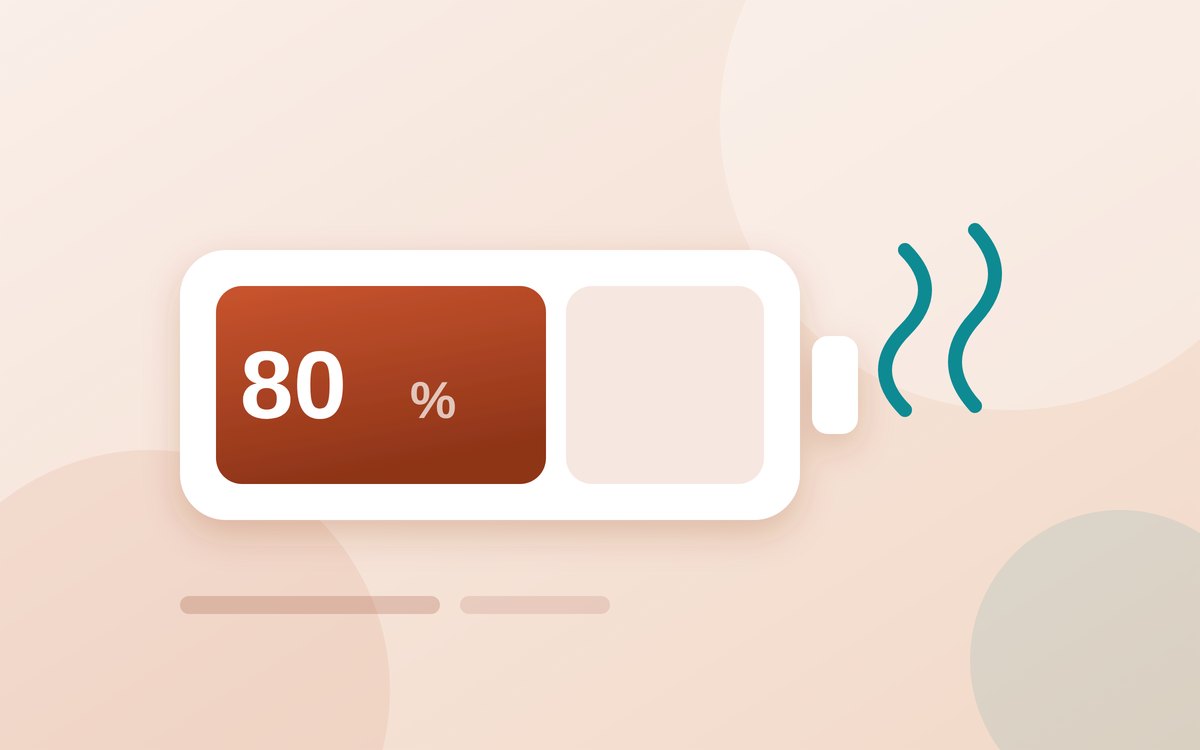
- Every phone sold in the EU must survive 800 charge cycles while keeping at least 80 % of its original capacity.
- Spare parts for seven years after the model stops being sold, delivered in 5–10 working days.
- Operating system updates for at least five years from the date the last unit is sold.
- The data is public in the EPREL database — which makes it useful even if you are buying in a country with no such label.
What the label actually shows
The layout will be familiar from fridges and washing machines, but the fields are specific to mobile devices. Three of them are graded classes; three are raw figures.
The battery figures deserve a moment. "Endurance per cycle" is how long the phone runs from full to empty under a standardised usage profile, which is the closest thing to a like-for-like battery-life comparison that exists: every manufacturer runs the same test. "Endurance in cycles" is the durability number — how many full charge cycles before the battery drops to 80 % of its rated capacity.
The four rules a phone must meet to be sold
The label sits on top of an ecodesign regulation, and that is where the teeth are. A device that fails these does not get a bad grade — it does not get sold.
Alongside those, devices must show greater resistance to accidental drops, scratches, dust and water — the qualities the free-fall class and the IP rating then quantify on the label. Not everything is covered: devices with flexible main displays and phones designed for high-security communication sit outside the scope, which is why a folding phone will not always carry the same label as a slab.
Keep reading
Advertisement
Reading the repairability class
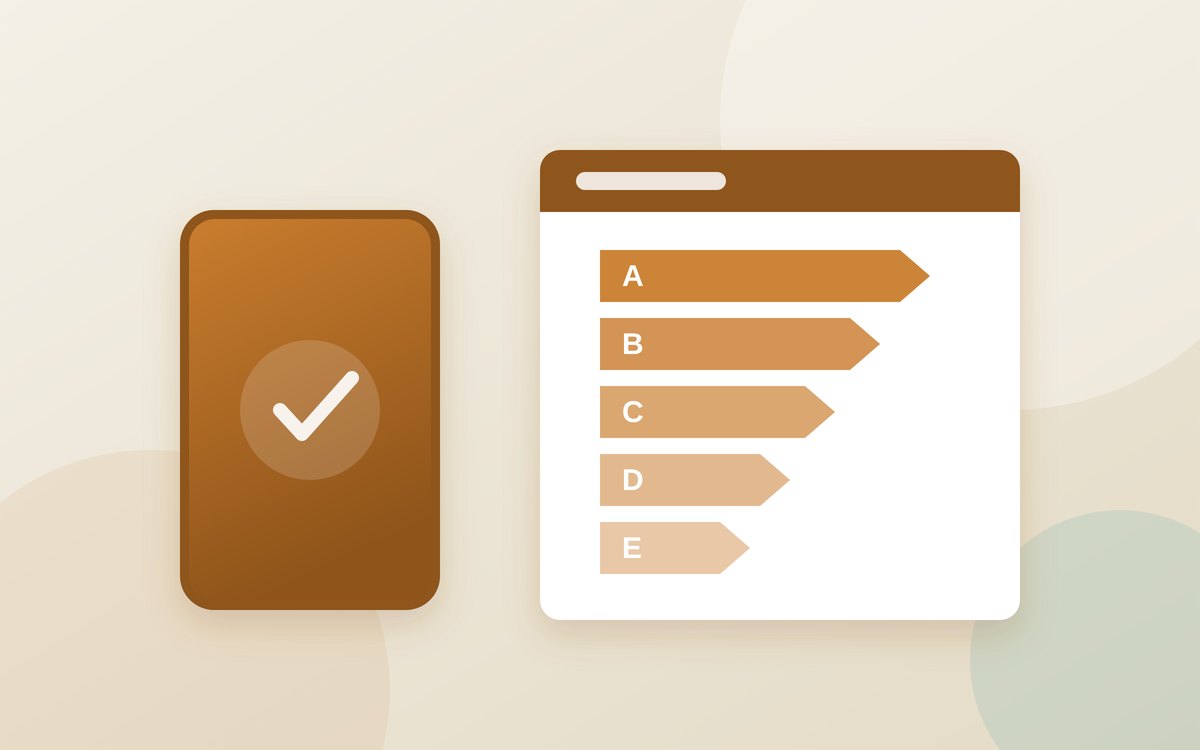
The repairability grade runs from A, most repairable, to E, least. It is built from an index combining six parameters, and the underlying detail is published in EPREL, the EU's product database, rather than squeezed onto the sticker.
Two things make it more useful than the repair scores that came before it. It is mandatory rather than voluntary, so a manufacturer cannot decline to be graded. And it is comparable, because every device is assessed against the same parameters — which is exactly what the older, self-declared repair indices could not offer.
Grade A is not a promise you can fix it yourself
Repairability here means parts, documentation and disassembly can be obtained on fair terms — largely by a professional. It is a measure of whether a repair is possible and affordable, not whether it is a kitchen-table job.
How to use this outside the EU
Here is the part that makes this worth reading from anywhere. Manufacturers rarely build a separate variant of a phone for Europe. The battery cell, the adhesive, the screen assembly and the parts policy are usually the same hardware sold everywhere, with regional differences confined to radio bands and bundled software.
So if a model is sold in the EU, its label data describes the phone in your hand too, whichever country you bought it in. Search the model in EPREL and you get a drop-resistance class and a repairability class for hardware whose US or Australian listing mentions neither.
- Find the exact model name as sold in Europe — regional model numbers differ, the marketing name usually does not.
- Look it up in EPREL, the public product database, or read the label on any EU retailer's product page.
- Compare two candidates on repairability and free-fall class, not just on chipset and camera.
- Check the cycle figure against the 800 minimum. Comfortably above it is a real signal; a device sitting exactly on the floor of the requirement is another kind of signal.
What the label does not tell you
It says nothing about price of parts in practice, nothing about parts pairing — the practice of software-locking a component to a specific device so a genuine replacement loses features — and nothing about how good the phone is at being a phone. A device can be graded A for repairability and still be a poor buy.
It also cannot tell you what the manufacturer will do after the mandated window closes. Five years of OS updates is a floor, and several manufacturers already promise considerably more; the label does not distinguish between the company that will stop the day the obligation ends and the one that will not.
Using it when you buy
Treat the label as three questions rather than six numbers. How long will the battery stay useful — the cycle count. How likely is a drop to end it — the free-fall class and the IP rating. And if something does break, can it be fixed at a sane price — the repairability class.
Answer those three before comparing camera sensors, and you will end up with a phone you keep for longer, which is the only upgrade strategy that reliably saves money.